Fear can be overwhelming to deal with, but the love of God can crush the spirit of fear and remove it from your life completely. Fear holds people in bondage. It can stop a person from chasing a dream, reaching a goal, and having the true friendships they were made for. Fear is not a neutral feeling; it comes from the enemy, and the enemy uses it to bring torment into a person’s life. Fear arrives first and torment follows close behind it, which is why I always mention the two together.
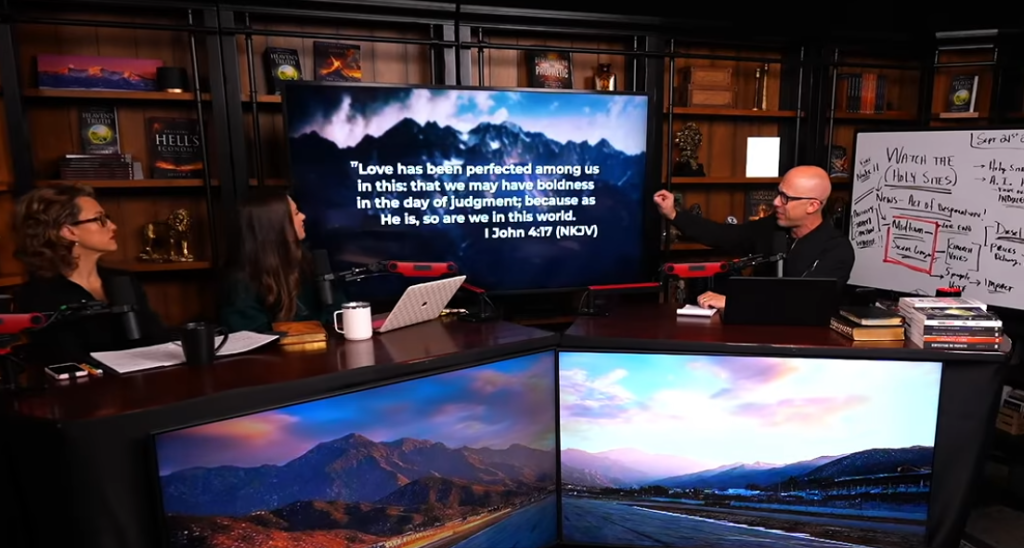
There is no fear in love; but perfect love casts out fear, because fear involves torment. But he who fears has not been made perfect in love.
—1 John 4:18
1 John 4:18 addresses fear and love in the same breath, and shows that the two cannot coexist in the same life. Perfect love and fear cannot occupy the same space any more than oil and water can mix. When a person is rooted in the perfect love of Jesus, understands what He did on the cross, and what His love actually cost Him, fear has nowhere left to stand.
Many soul wounds often ride along with fear. They could be carrying a wound from childhood for decades, long after they have grown children of their own. Instead of continually revisiting the pain of that wound, the best answer is to let the love of Jesus heal the wound and remove the fear.
I have found that most people do not actually need a longer explanation of why they are afraid. They need a longer exposure to how loved they already are. When people sit in the truth of God’s love for them, fear shrinks. In the same way, torment loses its grip the moment someone stops negotiating with it and starts resting in who they are: the beloved of the Lord.
Many take the approach of trying harder not to be afraid. Willpower rarely wins against a spirit; love does, every time, because love changes what a person actually believes about themselves and about God rather than just managing the symptom for an afternoon. The goal is not to get better at suppressing fear when it shows up. The goal is to get so rooted in His love that fear has nothing left to attach to.
How God Looks at You
Imagine the person you love most in this life: a child, a spouse, a close friend. Think about what you would do for them, the lengths you would go to if danger came near, how fast you would be standing at their door if they called. Now picture a baby, a niece or a nephew, your own child, or the child of your best friend. Consider how much you simply enjoy looking at that baby, wanting to give them everything, just wanting to stare at them because the love is so complete and so unconditional.
God looks at every one of us the same way you would look at the child or baby you thought of. He wants to see our faces. He delights in us the same unconditional way, regardless of anything we have done, and it does not change when we fail Him. Take whatever you would do for the one you love most, and however far that devotion goes, and then multiply it, not by a little but by a thousand times over. That is closer to the actual scale of how much God loves a person, and there is nothing anyone can do to talk Him out of it.
I think of the one friend I would call if something had gone extremely wrong, the friend whose first response is never a question of why but only of what is needed right now. This friend is already moving before the explanation is finished. That readiness, no hesitation and no interrogation, is the picture Jesus gives of what real love looks like toward His own.
I want you to say this out loud, by name, and confess it over yourself because fear loses its grip the moment a person actually believes it: “God loves me so much.” His love covers every situation: a difficult season, a housing concern, a family need, a financial need. Falling into the love of Jesus means stepping into the identity John wrote about himself, the one the Lord loves. The way out of fear is to fall further into that love, not to try to manage the fear on its own terms.
Nothing a person has done puts them outside the reach of His love, not real failure or real sin. Struggling and sinning will never separate you from His love. A person remains exactly who they already are to Him no matter what they have done. He sees them as His favorite, His son or daughter, someone He delights to call His own.
Our standing with Jesus does not fluctuate with a good day or a bad one. Someone can be walking in real victory this week and barely holding on next week, and the sonship underneath both weeks is unchanged. Fear likes to argue otherwise, suggesting that love has to be re-earned every time circumstances turn. It does not, and that is exactly why declaring God’s love for you matters more on the hard days than on the easy ones.
Casting Out Fear and Welcoming Prodigals Home
Fear and torment do not stand up against a prayer prayed in the name of Jesus. In His mighty name, every emotional wound and every hurtful word spoken over a person’s life can be struck down: Rejection and the fear of man can be bound, and the life and love of Jesus can be commanded over that person instead.
Doubt and unbelief cannot remain once the love of Jesus is genuinely known and received. If you carry a specific wound, such as the fear of abandonment, you can name it directly, renounce it, and welcome the peace of God into the exact place where that wound used to sit.
We can also pray specifically for prodigals: Sons and daughters, or grandchildren who have wandered from the Lord. Every assignment working against them can be addressed directly in prayer. For example, the whole body of believers can stand together and ask people to be placed in their path who will speak life to them and call them home. None of that is wasted prayer; it is partnering with what God is already doing on their behalf.
Praying this way is not meant to be solitary. Scripture promises something significant happens when believers come into agreement over a specific need. If two or more come into agreement in prayer, it says it shall be done for them (see Matthew 18:19). A parent praying alone is powerful; a whole room of people standing in agreement in the name of Jesus carries a different kind of weight.
The same prayer extends to the physical body, not only to the heart. I believe in praying for total healing and total wholeness, physical and emotional together, along with a peace that goes beyond what the circumstances alone could explain.
And the peace of God, which surpasses all understanding, will guard your hearts and minds through Christ Jesus.
—Philippians 4:7
The peace in Philippians 4:7 is not the absence of a hard situation; it is what remains present in the middle of one. Identity sits underneath all of this. Just as children carry the likeness of their parents, humanity carries the likeness of God. Anyone struggling with identity, appearance, or a sense of security can rest in the fact that God made them in His image on purpose (see Genesis 1:27). He wants to look at them the way anyone looks at a beloved child, longing simply to see their face and be near them.
Prayer like this is not a one-time transaction. The healing and the wholeness tend to land in layers, and the peace that follows is meant to be lived in rather than visited occasionally. Returning to this kind of prayer, for oneself and for the prodigals still out there, is less a single event than a posture worth keeping.
Living in the Joy of the Lord
Faith is not only believed, but it is lived out, and part of living it out is refusing to let darkness set the tone for a day. The joy of the Lord is a person’s strength, and it is accessed by faith, through worship, not by waiting for a feeling to arrive on its own first.
Do not sorrow, for the joy of the LORD is your strength.
—Nehemiah 8:10
Worship does not need to look dignified to be real. Whatever stirs you up in the Holy Spirit, whether that is dancing in a bedroom, singing out loud, or simply pressing into praise, is worth doing without worrying about how it looks to anyone watching. Breaking out of the tunnel vision of an ordinary day, even if it feels a little undignified, is often exactly what stirs a person back up on the inside.
Self-consciousness and fear usually travel together. The same hesitation that keeps someone quiet in worship is often what keeps them quiet about a dream, a calling, or a relationship that scares them. Getting out of the bubble in one area tends to loosen it in others, which is part of why worship is not just an emotional release but genuine spiritual practice. It trains a person to stop managing how they appear and start simply responding to what they actually feel toward God.
I like to take an ordinary love song, the kind written for another person entirely, and turn the words toward God instead, telling Him that if the world will not sing to Him, I will. He is not nearly as religious as people assume. He receives that kind of worship the same way a father receives a child’s plain, unpolished affection, because He is not looking for a performance. He is looking for our attention.
When a decision is unclear, whether it concerns a relationship, job, or a move, peace becomes the compass, and peace is found by spending time with Jesus rather than reasoning the decision out alone. Getting to know Jesus works the same way as getting to know anyone we love deeply. You can ask questions and spend real time together, learning what He loves, what grieves Him, and how He speaks. Scripture makes a direct promise about that kind of asking.
Ask, and it will be given to you; seek, and you will find; knock, and it will be opened to you.
—Matthew 7:7
Use Matthew 7:7 and pray specifically: “Lord, give me revelation knowledge of Your love, and wisdom to know how to love You well.” He loved us first so that His love could be received and then given away to others. Press into the Word of God, as you press into a close friendship. Learn His love language the way you learn the love language of a spouse or a close friend. When you do these things, this is what it means to spend time in the secret place. God already decided that He loved you when He sent His own Son (see John 3:16); it was never a question to begin with.
My Dad has a saying I have always loved: “Read the Word until it starts talking back to you.” That is what turns this truth from an idea into a lived reality. Fear, torment, and anxiety cannot stay once that love is genuinely known.
None of this has to wait for a crisis to prove itself. The same love that meets a person in a genuine emergency is available on an ordinary Tuesday, which is actually the better time to build the habit of leaning into it. By the time pressure shows up, the posture of resting in His love is already familiar instead of improvised.
So if fear has had a say in a decision, relationship, or a season for longer than it should have, this is the invitation: Stop negotiating with it and start sitting in how loved you already are. In the Father’s love, fear will lose its grip every time.
For Jesus,
Alison Joy
Click here to watch the full video.