A prophetic gift can run in a bloodline. Amos said plainly that he was not the son of a prophet and had never trained to be one before the Spirit of the Lord came and spoke to him (see Amos 7:14). Timothy carried a genuine faith that had already lived in his grandmother Lois and his own mother before it ever lived in him (see 2 Timothy 1:5). An inherited gift is still a raw gift. It has to be trained. Get into the Word of God, sit under a teacher, submit, commit, and serve until the Lord Himself raises up your gifting.
People often misquote the promise that God does nothing without revealing His secret to His servants the prophets, treating it as a blanket rule that He tells the prophets everything before He does anything. That is not true. The revealed things already belong to every believer; there is no private interpretation of Scripture reserved for a select few.
The secret things belong to the LORD our God, but those things which are revealed belong to us and to our children forever, that we may do all the words of this law.
—Deuteronomy 29:29
The secret things are different. Those belong to God, and He releases them to prophets when He chooses, never in a way that contradicts what is already written and never veering into some novel doctrine nobody has ever encountered before. Whatever comes through the prophetic should always point back to Jesus Christ as Lord, since the testimony of Jesus itself is the spirit of prophecy (see Revelation 19:10).
There is also a real difference between an Old Testament pronouncement and a New Testament one. In the Old Testament, prophecy functioned as a direct, fixed word. In the New Testament, it functions more as an interpretation walked out in cooperation with the Holy Spirit. Agabus prophesied that Paul would be bound by the Jews, and Paul was, in fact, bound, though by Roman hands rather than Jewish ones. That does not make Agabus a false prophet (see Acts 21). It makes him a New Testament prophet, working through a process rather than issuing a courtroom verdict. This softens the instinct to brand a prophecy false the moment its details land slightly differently than expected.
Some in the culture argue that prophets, apostles, and the rest of the gifts already ceased once the first apostles finished their work. The obvious follow-up question is which date that supposedly happened on, since no one offering that argument can name one. It is worth noting that decades after the New Testament was compiled, a circulating handbook still gave believers instructions for receiving traveling apostles and prophets into their communities. A handbook for receiving something is a strange thing to keep producing after apostles and prophets would have supposedly ceased.
For we know in part and we prophesy in part.
—1 Corinthians 13:9
Judas and Silas, both called prophets, worked the same way, moving forward only when it seemed good to the Holy Spirit and to them together (see Acts 15:28). Humility is the piece most often missing from prophetic ministry today. Saying, “It seems to me,” or “I sense this,” is a healthier habit than reaching for “Thus says the Lord” unless the weight of that phrase is fully understood and warranted.
In addition, setting a specific date for a prophesied event is not recommended as a general practice either. If the Lord gives someone a genuinely clear vision or dream and impresses a date on their spirit, then that person owes accountability to what was said. Short of that level of clarity, a date is simply a guess dressed up as revelation, and guesses dressed up as revelation are exactly what has given prophetic ministry a bad name in seasons past.
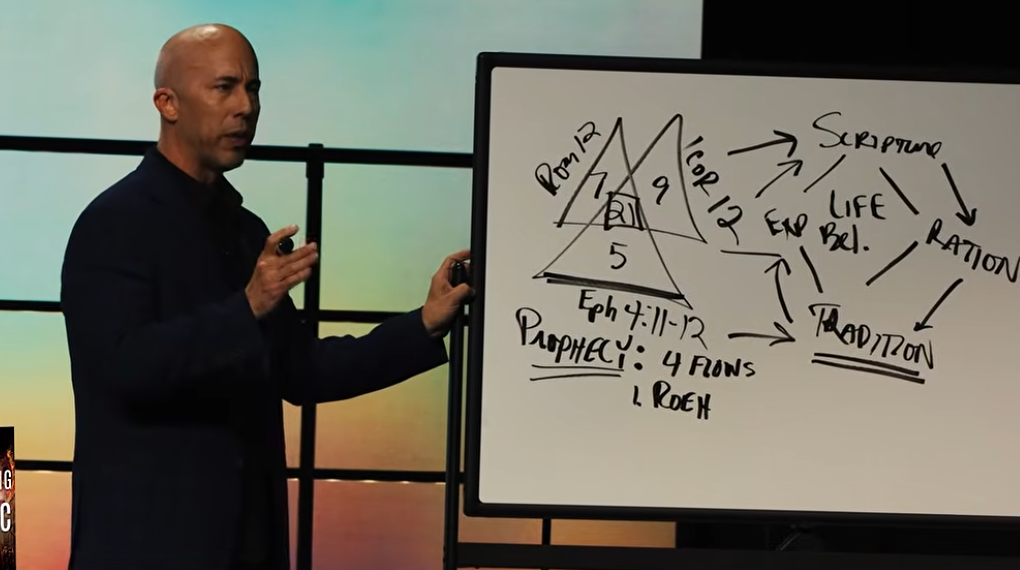
Four Prophetic Flows
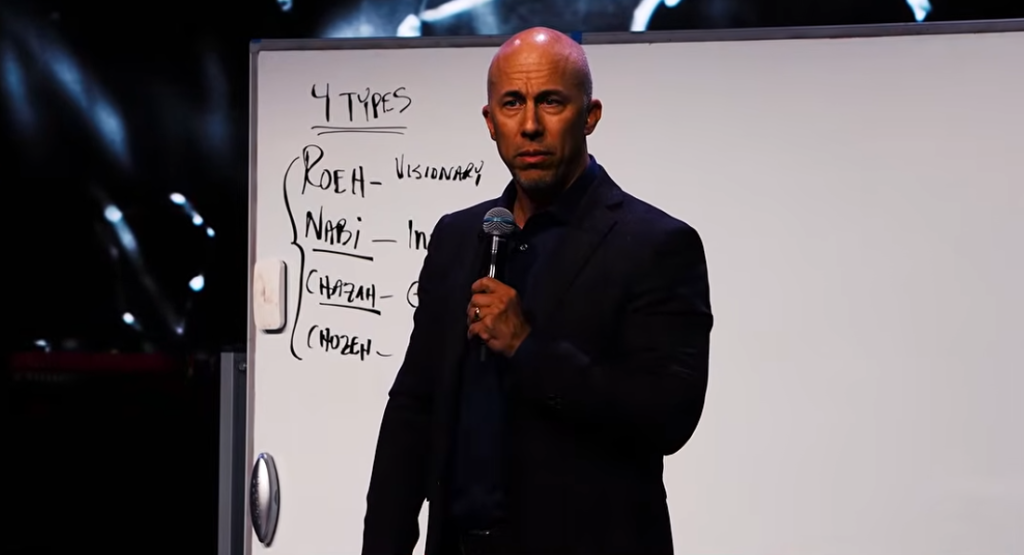
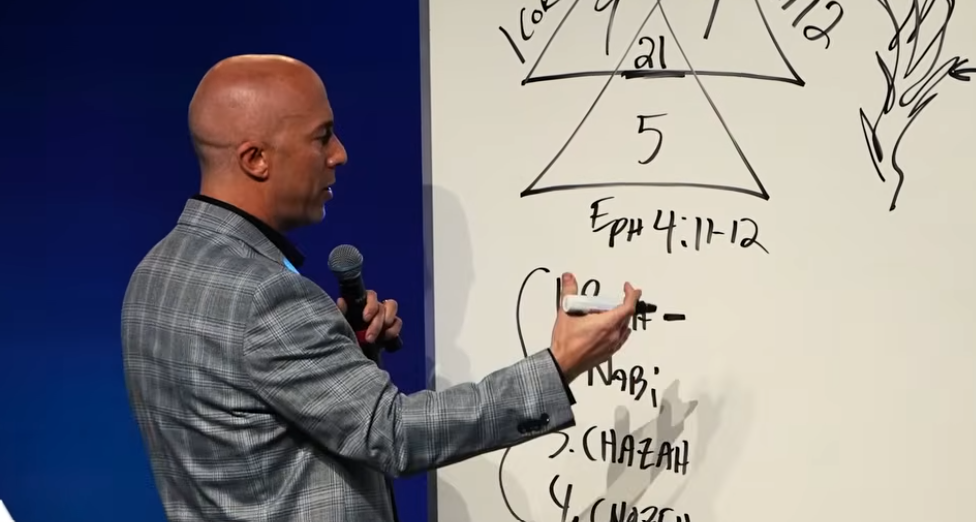
1 Samuel 9 gives language for at least four distinct ways the gift of prophecy tends to flow in a person’s life (see 1 Samuel 9:9). Roeh is the seeing gift that mostly shows up as gut instinct and initiative. It occurs when a person simply knows what needs to happen and moves. An example of this is the way the Sons of Issachar understood the times and knew what Israel ought to do (see 1 Chronicles 12:32). It also carries a willingness to sound an alarm in a generation and mobilize people around it. Not only do prophets carry this flow, but often leaders, chief executives, military officers, and pastors operate in Roeh when they simply know what the moment requires.
Navi is the bubbling-up gift, the on-the-spot, unplanned unction. It is the moment a minister sets aside a full day of notes because the Holy Spirit hands over something else entirely as the message is being delivered. It often comes as an impromptu word that could not have been planned the night before because it did not exist the night before.
Chazah, the gazing gift, is where seers tend to have an inward picture, mental image, or word of knowledge that starts to come alive as it is spoken. It can be intuitive rather than visual; a sense of the Voice of God pointing toward something to say to a particular person. This one carries real risk. It is possible to develop the gift so far that it slides into a kind of spiritual showmanship, detached from love and leaning toward mentalism rather than ministry. A performer’s instinct is to keep pulling impressive detail out of a room rather than staying tethered to why the gift exists in the first place. When I was young, a mentor once pulled me aside after a service full of accurate, impressive words for people and said the display was impressive, but not impressive to God, because the point was never the display. It was letting God love people through it. That correction reshaped an entire ministry. The goal stopped being demonstrations of accuracy and became building disciples who stand on who Jesus is in them rather than on gifting alone.
Chozeh is the rarer gift, the one that looks ahead. It cannot be induced by trying, and anyone attempting to force it is working from imagination rather than revelation. It comes when it comes, sometimes through a trance, a dream, or a waking picture that will not let go. One day a vision of an island with a volcano exploding came to me. It was seen early one morning with no explanation attached, and was shared publicly the same day as an invitation to pray. It was not shared so that we could claim it or come into agreement with it, but rather to intercede. Two days later, an undersea volcano near Tonga erupted in one of the largest explosions in recent history. It was visible from space, and we were able to intercede on behalf of the people’s lives there before the volcano ever erupted.
Gift or Office
Prophecy is available to every believer, and it moves at the speed of desiring it (see 1 Corinthians 14:1). Moving in the gift, however, does not make a person a prophet. The real difference between the gift of prophecy and the office of a prophet is responsibility. A gift can operate freely, whereas an office carries jurisdiction to a specific body of people that it is accountable to edify and equip (see Ephesians 4:11-13). Paul made the distinction directly, telling one church that even if he was not recognized as an apostle elsewhere, he certainly was to them (see 1 Corinthians 9:2). That is what an office looks like: You are responsible to a people, not just performing in front of one.
None of this is ultimately about the gift at all. Ministry is about people, and letting God love people through whoever carries the gift. That single realization reframes everything that gifting is for. A gift exercised without that reframing eventually turns into a performance, however accurate it happens to be, and accuracy was never the actual assignment.
The honest question worth asking a self-declared prophet is simple: “Who are you responsible for, and where is that particular group being edified because of it?” A platform has become an easy substitute for people who claim they are in the office of the prophet. Anyone can start a channel, post a striking word, and let a following stand in for the accountability an actual office requires. When someone has a gift but does not have believers that they are responsible for edifying, they are not in the office of the prophet, and no collection of impressive words changes that math.
None of this is a call to dismiss anyone still developing in the gift. Everyone starts somewhere, usually with more zeal than accuracy, and that stage is not a disqualification. It is simply not yet an office, and pretending otherwise sets a person up to answer for a jurisdiction they were never actually given.
Called to Be Light
Dreams are notoriously hard to pin down, and the best interpreter of a personal dream is almost always the person who had it. It is better to walk it out with the Lord rather than relying on someone else to interpret your dreams. God speaks in signs, symbols, and strange pictures on purpose.
It is the glory of God to conceal a matter, but the glory of kings is to search out a matter.
—Proverbs 25:2
The Lord primarily speaks through His written Word. However, I asked the Lord directly why there are certain things He does not say plainly but instead speaks in symbols and signs. The Lord answered that He likes to be pursued. The secret things stay His until He chooses to hand them over, and even then they will still need to be searched out rather than simply received.
Agabus modeled the better response to hard news. He stood up and named a famine before it arrived (see Acts 11:27-29). The church did not dig in and brace for scarcity or treat the warning as a reason to protect what they had at the expense of everyone else. It sent aid to the region as the famine hit, meeting the warning with generosity rather than fear. That is what a dark culture actually needs from people who can see what is coming. They need light and movement toward the need to meet it, or intercessors to pray and counter what was seen.
The same principle applies to whatever unsettling thing a person happens to see coming, in a life, a family, or a nation. Naming a coming difficulty is not itself agreement with darkness; cooperating with fear about it is. There is a real difference between calling out a genuine warning and reinforcing it by rehearsing it out loud until it grows teeth it did not originally have.
Who gave Himself for our sins, that He might deliver us from this present evil age, according to the will of our God and Father.
—Galatians 1:4
Even on a hard day, a believer walking out an actual assignment from God is standing in the safest possible place, regardless of how it looks from the outside. There will be seasons that call a person somewhere that looks unwise to everyone around them, but being exactly where God sent them turns out to be the safest place available, regardless of how it reads from the outside.
Identity carries more weight here than performance ever will. The Apostle John outlived every other apostle because he had settled something in his heart that the others had not: He was the one Jesus loved (see John 13:23). That kind of settled identity changes how a person moves through hard seasons because a person eventually acts like the God they believe they serve. A revelation of how much God loves His people makes it far easier to actually love people in return, which was the entire point of your gifts from the beginning.
In the end, it is not about the accuracy of a gift of prophecy; instead, it’s about knowing who you are as a believer, and loving people in the arena you are called to. Repentance still matters, but so does confessing the righteousness that comes with it rather than living as though the forgiveness never quite landed. Jesus is Lord over whatever the days ahead hold, and the confession of Christ outlasts every accurate word a gift could ever produce.
For Jesus,
Joseph Z
Click here to watch the full video.